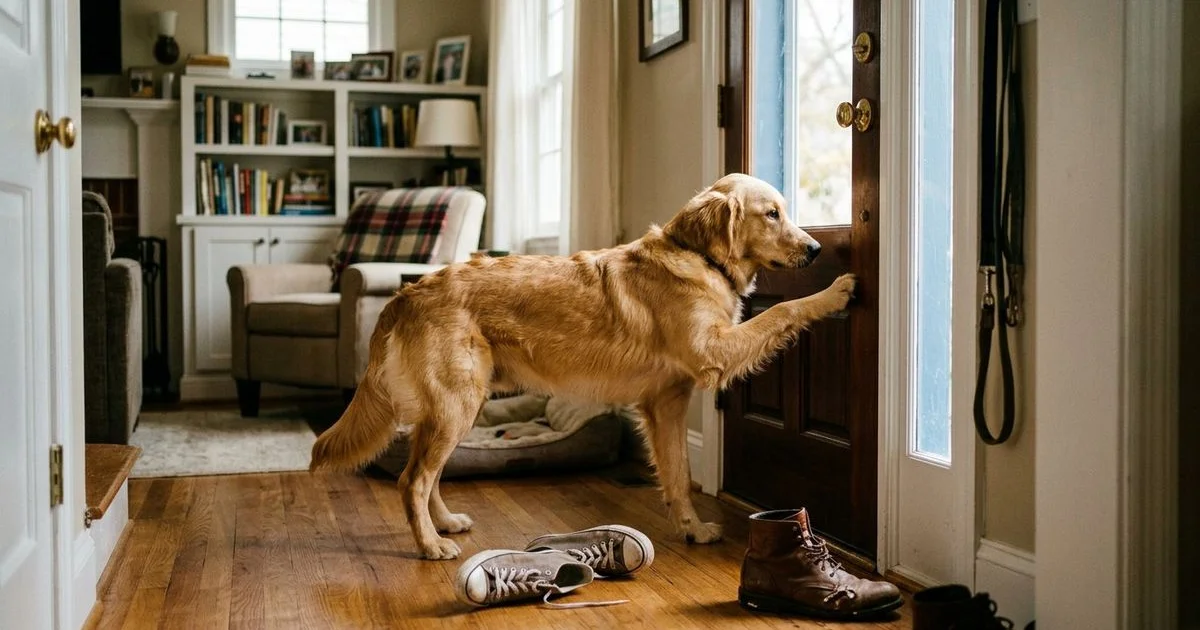
We see the same frustrating disconnect every day. Many dedicated professionals provide excellent food and weekend hikes, yet they still return home from a long hospital shift to shredded cushions or noise complaints.
This pattern usually points to a simple truth about canine behavior.
Our certified counselors at Dog Daycare Durham founded this facility on the premise that dogs need safe, structured enrichment to thrive. Dogs are highly social, active creatures who fundamentally struggle with prolonged isolation. A quiet house often feels like a punishment to an understimulated pet.
Let’s look at the data, decode what these behaviors actually mean, and explore a few practical ways to respond. Here is a breakdown of the 5 Signs Your Dog Needs Daycare: Boredom, Anxiety, and Beyond.
1. Destructive Behavior When Left Alone
Coming home to chewed shoes, scratched doors, or raided trash cans is a glaring indicator that your dog is struggling during the day. Dogs do not destroy things out of spite. They chew and dig because they are understimulated, anxious, and desperately looking for a physical outlet.
We frequently hear from busy pet parents who feel guilty about their dog’s destructive habits. A massive 2025 study in the Journal of Veterinary Behavior revealed that nearly 86% of dogs evaluated showed moderate to severe separation or attachment issues. This level of canine anxiety often leads to dangerous, compulsive chewing.

Veterinary clinics across the US report skyrocketing costs for emergency foreign body surgery to remove items like socks or string. Data from Coyote Ridge Veterinary Clinic in Colorado shows that a general practice surgery in 2025 costs between $2,000 and $3,000. Complex cases requiring a board-certified mobile surgeon and overnight ICU care easily push that bill past $5,000. Providing a safe, supervised environment is a fraction of the cost of a major medical emergency.
The Problem with At-Home Enrichment
Many owners try leaving puzzle toys or food-stuffed KONGs to keep their pets occupied. This strategy works well for mildly bored dogs, but it often fails completely for highly stressed animals.
- Avoidance Learning: Highly anxious dogs experience a psychological block where the food toy itself becomes a predictor of distress.
- Food Refusal: Your dog might entirely ignore high-value treats until you walk back through the door.
- Rapid Consumption: Smart breeds might finish a puzzle in ten minutes and spend the next nine hours pacing.
- Safety Risks: Unsupervised dogs can sometimes break and swallow parts of heavy-duty chew toys.
Our team sees high-energy breeds like Labrador Retrievers and German Shepherds particularly prone to these destructive behaviors without adequate exercise. A full day of engaging activities gives these dogs the stimulation they crave. They return home tired and content, keeping your furniture and their digestive tracts completely safe.
2. Excessive Barking or Howling
If your neighbors or apartment management complain about your dog vocalizing while you are away, you need to take the situation seriously. Excessive barking, whining, or howling is a primary symptom of isolation distress.
We know that a typical dog bark registers between 80 and 100 decibels. Golden Retrievers, for example, can hit 113 decibels. This noise level easily penetrates apartment walls and travels rapidly through quiet neighborhoods.
The Cost of Canine Vocalization
Ignoring persistent barking can lead to severe consequences for renters and homeowners alike. US city animal control departments receive hundreds of nuisance complaints monthly regarding noisy pets, and local governments are cracking down.
Recent legislation highlights just how seriously municipalities take this issue. A new 2025 state law in Delaware defines a noise disturbance as continuous barking for just 15 minutes, carrying fines of up to $150 per violation. These strict ordinances are becoming standard across the country.
- Lease Violations: Many property managers issue strict strike notices for continuous daytime noise.
- Financial Penalties: Local noise ordinance fines can quickly add up with repeated daily complaints.
- Eviction Threats: Unresolved noise issues often force pet owners into terrible ultimatums.
Some dogs bark out of sheer boredom to entertain themselves, while others howl because they cannot settle down without their person present. The solution always involves giving your dog something meaningful to do.
Dogs at Dog Daycare Durham enjoy supervised play sessions, rest periods, and enrichment activities throughout the day. There is simply no time for anxious barking when a dog is busy playing with friends and burning off energy.
3. Over-the-Top Excitement When You Come Home
A wagging tail and a happy greeting at the door are completely normal behaviors. If your dog is jumping, spinning, barking uncontrollably, or practically climbing the walls, it usually means they have been bottling up tension all day.
Scientists call this level of hyperactivity Frenetic Random Activity Periods, or zoomies. It is your dog’s way of releasing hours of pent-up adrenaline in a matter of seconds. An explosion of movement like this actually indicates a nervous system in overdrive.
Understanding Canine Stress Hormones
Our counselors understand the deep physiological impact of isolation on a pet. A dog left alone for eight to ten hours experiences a massive spike in cortisol, the primary stress hormone.
Recent 2023 data published by Canine Evolutions reveals a shocking difference between human and canine stress responses. The half-life of cortisol in humans is roughly 60 to 90 minutes. In dogs, the half-life of cortisol ranges from 300 minutes up to an astonishing 72 hours, meaning their stress lingers for days.
| State of Dog | Cortisol Level | Typical Homecoming Greeting |
|---|---|---|
| Bored & Isolated | High (Lingering up to 72 hours) | Jumping, frantic pacing, uncontrollable vocalization |
| Adequately Exercised | Normal | Relaxed tail wags, calm approach, easy to redirect |
| Exhausted from Daycare | Low | Gentle greeting, immediate settling on a dog bed |
We consistently see that dogs attending a structured program greet their owners with calm, happy energy. They have already had their fill of exercise and socialization for the day. Homecoming becomes a relaxed reunion rather than a chaotic management situation.
4. Poor Social Skills With Other Dogs
Does your dog lunge, bark, or cower when they encounter other dogs on walks? Insufficient exposure during a puppy’s most formative months frequently causes poor social skills.
The American Veterinary Society of Animal Behavior states that a dog’s golden socialization window is remarkably brief, typically closing between 12 and 14 weeks of age. Missing this critical period increases the risk of significant behavioral problems by over 60 percent. Dogs who miss out on positive peer interactions often develop leash reactivity or fear-based aggression later in life.

Building Confidence in Adult Dogs
Fortunately, adult dogs can still improve their social skills with regular, structured exposure. Uncontrolled environments like public dog parks often make reactivity worse because the interactions are highly unpredictable and chaotic.
We carefully manage playgroup dynamics by matching dogs by size, energy level, and temperament. Dogs who start out shy or reactive often make remarkable progress within a few weeks of consistent attendance. They learn appropriate play signals and develop essential emotional resilience.
- Size-Matched Groups: Small dogs build confidence without the fear of being trampled by larger breeds.
- Temperament Pairing: Rough-and-tumble players are separated from gentle, cautious sniffers.
- Supervised Breaks: Staff enforce mandatory rest periods to prevent overstimulation and grumpy behavior.
If your dog struggles to make friends or becomes reactive on leash, a professional facility offers a controlled setting to practice communication skills safely.
5. Weight Gain or Lethargy
Just like humans, dogs gain weight and lose muscle tone when they sit on a couch for forty hours a week. If your normally active dog seems unusually lethargic, a severe lack of daytime physical activity could be the culprit.
Our team frequently sees the physical toll of a completely sedentary lifestyle. The Association for Pet Obesity Prevention published a comprehensive survey in late 2024 showing that an alarming 59 percent of dogs in the US carry excess weight. This excess weight is a serious medical crisis.
The Hidden Dangers of Canine Obesity
Veterinary studies confirm that obesity is a chronic inflammatory condition, not just a cosmetic issue. Carrying too much weight can reduce a dog’s life expectancy by nearly two full years and drastically increase the risk of severe joint issues.
”A sedentary dog who sleeps all day while their owner works a long shift is missing the daily cardiovascular exercise required to maintain joint health and metabolic balance.”
Structured play provides hours of dynamic, full-body movement. Dogs spend their time running, wrestling with playmates, walking between activity areas, and engaging with specialized enrichment equipment.
We hear from pet parents all the time who see massive improvements in their dog’s stamina after just a few weeks of attendance. A tired dog is a healthy dog, and consistent daily exercise helps maintain a lean body mass throughout their entire life.
What to Do If You See These 5 Signs Your Dog Needs Daycare: Boredom, Anxiety, and Beyond
If one or more of these signs sounds familiar, your dog is communicating a clear need for a lifestyle adjustment. They require more physical activity, mental stimulation, and social interaction than their current routine provides.
We recommend taking a proactive approach to your pet’s behavioral health. Here is the exact process to safely introduce your dog to a new daytime routine.
- Start with a formal evaluation: Every dog should begin with a temperament assessment conducted by trained professionals.
- Rely on safety protocols: Facilities following strict guidelines, like those from the Professional Animal Care Certification Council, assess personality carefully before placing dogs in groups.
- Commit to a consistent schedule: Dogs thrive on predictable routines, showing noticeable behavioral improvements within two to three weeks of attending a few days weekly.
- Monitor the progress: Transparent facilities offer very easy ways to check in on your pet’s behavior.
- Use available technology: Our 24/7 webcam system lets you watch your dog throughout the day, providing ultimate peace of mind while you work.

The rapid transformation of an anxious or reactive dog in a supportive environment amazes many pet parents. Finding the right facility is an investment in your dog’s long-term happiness and health.
Reviewing these 5 Signs Your Dog Needs Daycare: Boredom, Anxiety, and Beyond is an excellent starting point. Every dog has completely unique needs and thresholds for boredom.
Our team is always here to help you determine the absolute best path forward. Giving your pet the enrichment they deserve has never been easier or more rewarding.
Do not let another couch cushion become a casualty of boredom.
Curious about how often your dog should attend daycare? A detailed guide is available to help you build the perfect schedule.
When you need overnight care, our luxury boarding provides the same high level of attention around the clock. Contact the facility today to schedule your dog’s initial evaluation.
Want the Best Care for Your Dog?
Schedule a free Interview Day and see why Durham pet parents trust our certified counselors.
Schedule Free Interview Day