Leaving a dog overnight for the first time usually sparks a wave of guilt for busy pet parents. From what I see on the floor, that initial separation anxiety is completely normal. Recent data from a 2022 CertaPet study reveals that nearly 47% of Americans feel intense anxiety when separated from their dogs.
Our facility, Dog Daycare Durham, was founded on a simple premise: dogs need safe, structured enrichment while you work. They adapt to new environments much faster than humans do.
This guide breaks down First-Time Dog Boarding: 7 Tips to Prepare Your Pup.
Tip 1: Do a Trial Day at Daycare First
Booking a practice run is the single most effective action you can take before an overnight stay. Bring your dog in for a full day of daycare a week or two before their boarding reservation.
Our staff uses this short visit to help your dog build positive associations with the new sounds and smells. This low-pressure introduction prevents the environment from feeling completely foreign during a longer trip.
Separation anxiety is a growing concern for modern pet parents across the US. A 2025 study from the Dog Aging Project found that nearly 86% of dogs exhibit some form of separation or attachment distress.
The Benefits of a Trial Run
- Familiarity: Dogs learn the layout and realize you will always return to pick them up.
- Staff Assessment: Caregivers identify your dog’s favorite activities and resting habits.
- Stress Reduction: Establishing a baseline routine lowers cortisol levels during the actual boarding stay.
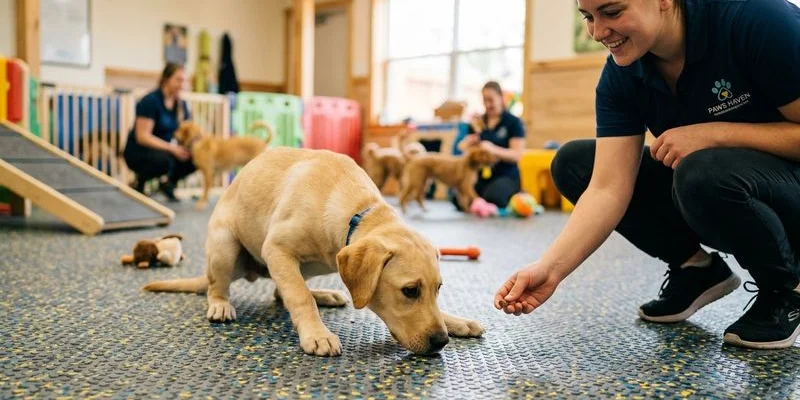
Our certified counselors use the trial day to assess your dog’s temperament and preferred play style. Catching specific quirks early allows the team to customize the care plan.
The American Kennel Club (AKC) frequently notes that these short trial runs significantly reduce the risk of behavioral regression in new environments.
Tip 2: Keep Your Routine Leading Up to Drop-Off
Dogs are incredibly observant creatures of habit. Any sudden disruptions to their normal routine will immediately spike their suspicion.
Our clients often make the mistake of showering their dog with excessive attention right before a trip. This well-meaning gesture actually signals to your dog that a major change is imminent.
A 2020 Vetnaturals survey noted that 61% of dog owners see visible signs of distress in their pets just by changing their pre-departure habits. Whether you work a standard schedule or irregular hospital shifts, keep feeding times and walk schedules exactly the same.
Maintaining a boring, predictable routine is the greatest gift you can give an anxious dog before a big transition.
We recommend treating the days leading up to the stay like any normal work week. Veterinary behaviorists at Cornell University emphasize that dogs rely heavily on daily routines to predict outcomes and manage their own stress levels.
Your calm consistency provides the exact emotional security your dog needs.
Tip 3: Pack Smart, Not Heavy
Packing an oversized suitcase full of toys creates unnecessary clutter and confusion. A few highly strategic items will provide far more comfort than a mountain of varied blankets.
Our team sees dogs settle in much faster when they have one specific item that smells strongly of their family. A 2020 study published in Applied Animal Behaviour Science demonstrated that dogs exposed to their owner’s scent via clothing slept more and barked less in unfamiliar places.
Animal behaviorists frequently recommend the Snuggle Puppy Behavioral Aid or a classic KONG toy. The Snuggle Puppy features a simulated heartbeat that provides immense emotional security for nervous sleepers.
The Essential First-Timer Packing List
- Pre-Portioned Meals: Measure out enough regular food for the entire stay into labeled bags.
- Clear Medications: Provide the original bottles with precise written instructions.
- Scented Comfort Item: Include one unwashed t-shirt or familiar blanket.
- Durable Chew: Pack a sturdy KONG or West Paw Zogoflex to keep them occupied during downtime.
- Basic Gear: Bring a standard leash and simple flat collar with an ID tag.
We always ask owners to prioritize function over variety when filling the overnight bag. A simple approach keeps your dog focused on the fun environment rather than guarding a pile of toys.
Our comprehensive boarding checklist offers a complete breakdown of seasonal items to include. Reviewing this guide ensures you bring exactly what your pup actually needs.
Tip 4: Update Vaccinations and Paperwork Early
Scrambling for expired vaccine records on the morning of your trip guarantees a stressful start. North Carolina law mandates a current rabies vaccination for all boarded dogs without exception.
We require proof of DHPP and Bordetella vaccinations to protect the health of every guest. The American Animal Hospital Association (AAHA) strongly supports these mandates to prevent outbreaks in high-density social settings.
Many top-tier facilities across the US strictly enforce these updated policies for the current year. The Bordetella vaccine is now frequently required every six months due to highly contagious kennel cough variants. Live vaccines also typically require a 14-day incubation period before the dog can safely enter a social setting.
Common Documentation Requirements
| Vaccine Type | Standard Requirement Timeline |
|---|---|
| Rabies | 1 or 3-year schedule (State Law) |
| Bordetella | Updated every 6 months |
| DHPP | Updated annually or 3-year schedule |
| Canine Influenza | Given annually (Highly recommended) |
Our staff highly recommends scheduling a veterinary check-up at least three weeks prior to your reservation. This buffer gives your dog plenty of time to build immunity and recover from any mild vaccine lethargy.
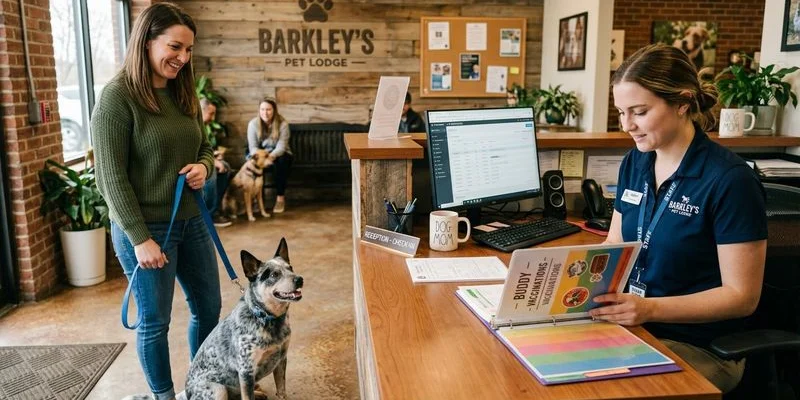
We utilize a digital portal that lets you submit all required forms directly from your couch. Handling the administrative tasks early allows you to focus entirely on your dog during the actual drop-off.
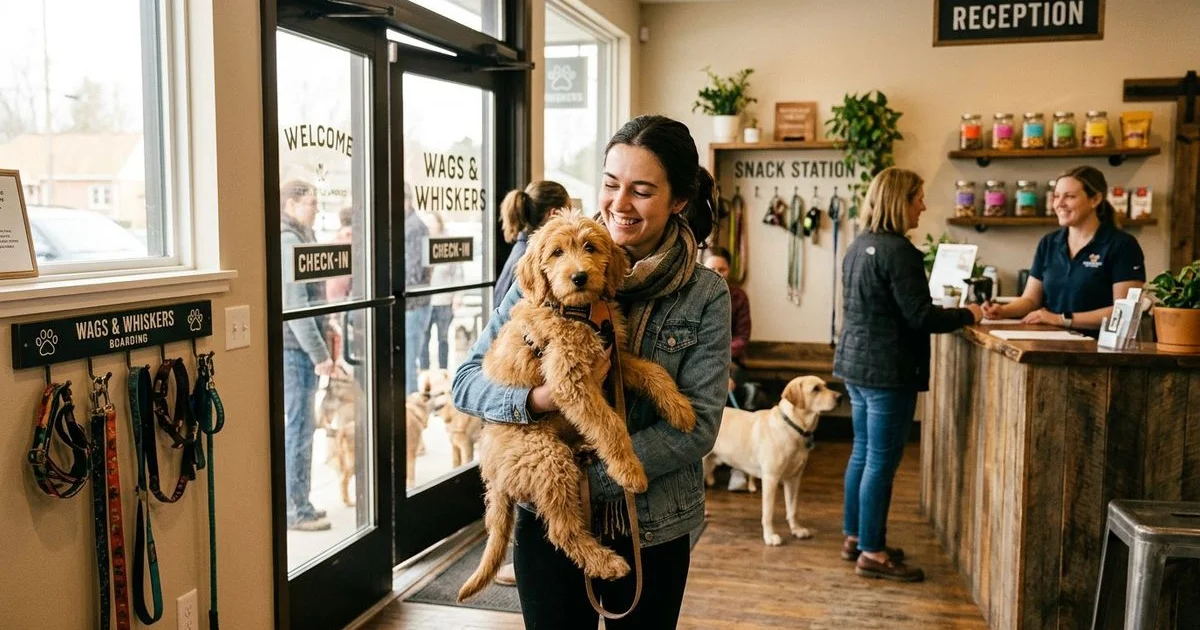
Tip 5: Master the Drop-Off
Your emotional state directly dictates how your dog will react to the facility lobby. Dogs mirror the energy of their owners with incredible accuracy. A landmark 2019 study from Linköping University proved that dogs synchronize their long-term stress hormone levels, specifically cortisol, with their owners.
Our front desk team frequently observes owners dragging out the goodbye process with long hugs and apologies. This lingering behavior accidentally signals to the dog that the environment is unsafe.
A quick, confident departure keeps your dog’s cortisol levels stable. Give a cheerful pat, hand over the leash, and turn to leave immediately.
Drop-Off Best Practices
- Project Confidence: Keep your shoulders relaxed and use a happy, upbeat tone of voice.
- Avoid the Sneak-Away: Never disappear while your dog is distracted, as this builds deep mistrust.
- Keep It Under 60 Seconds: Prolonged emotional farewells only serve to heighten canine anxiety.
- Choose a Morning Arrival: Dropping off early gives your dog a full day to burn energy before bedtime.
We encourage you to drop off your dog early in the morning. Morning arrivals ensure your dog has a full day to burn energy before bedtime.
Our trained counselors take over the moment you hand off the leash. The faster you step out the door, the faster your dog can join the playgroup and start having fun.
Tip 6: Use the Webcams (But Not Obsessively)
Remote monitoring technology offers incredible peace of mind for nervous pet parents. For busy medical professionals or university staff working long shifts, checking a live stream provides immediate reassurance.
We provide 24/7 webcam access precisely because transparency builds trust with our community. Many modern US facilities now use integrated systems like Gingr or iDogCam to offer high-definition video directly to your smartphone.
Watching a happy, sleeping dog validates your decision to choose a professional care environment. Constantly refreshing the feed can create unnecessary stress for you. Dogs experience natural ebbs and flows of energy, meaning they will inevitably spend parts of the day resting quietly alone.
When to Check the Cameras
| Time of Day | Typical Dog Activity |
|---|---|
| 9:00 AM - 11:00 AM | High-energy group play and socialization |
| 12:00 PM - 2:00 PM | Nap time and quiet individual resting |
| 3:00 PM - 5:00 PM | Afternoon enrichment and secondary play sessions |
Our advice is to limit your webcam checks to two or three strategic times per day. Peak play hours in the mid-morning are usually the most entertaining times to log in.
If you notice something concerning, simply pick up the phone. A quick conversation with the front desk provides immediate context that a silent video feed cannot deliver.
Tip 7: Plan a Low-Key Reunion
Picking up your dog is an exciting moment, but a chaotic reunion can overwhelm their senses. They have just spent several days in a highly stimulating, sensory-rich environment.
Our staff recommends greeting your dog with calm, gentle affection rather than loud shrieks of excitement. An overly enthusiastic greeting can trigger submissive urination or frantic jumping in an already tired pup.
Once you return home, allow your dog to decompress in complete silence. Provide a bowl of fresh water and open access to their favorite, quiet sleeping spot.
A “boarding hangover” featuring deep sleep and mild lethargy is a sign of a fun, active stay, not a medical emergency.
We assure owners that a “boarding hangover” is a completely normal physiological response. The American Sleep Association notes that adult dogs naturally need 12 to 14 hours of sleep per day, but that number can spike to 18 hours after a highly active boarding stay.
Expect your dog to sleep heavily for 24 to 48 hours as their adrenaline levels finally return to baseline.
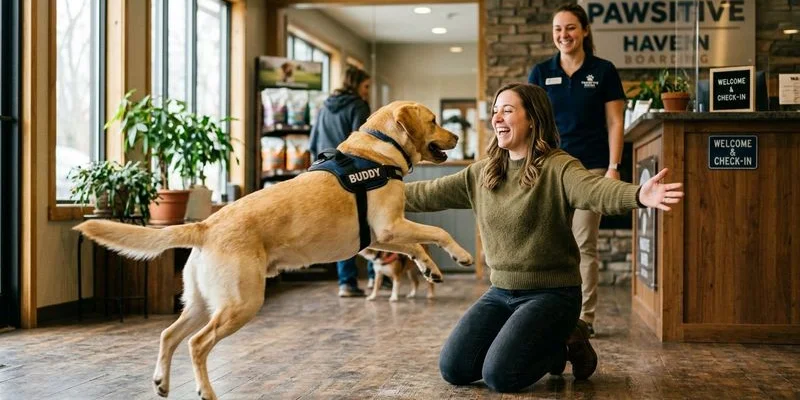
Do not panic if they skip a meal or seem slightly aloof on that first evening. They simply need a moment to readjust to the quiet pace of regular domestic life.
First-Time Dog Boarding: 7 Tips to Prepare Your Pup and Prevent Anxiety
Leaving a highly attached dog for the first time is a massive hurdle for many Durham residents. Thousands of pet parents adopt animals and never spend a single night apart until a mandatory work trip forces the issue.
Our primary goal is to prevent your personal anxiety from transferring to your highly perceptive dog.
Steps to Build Their Independence
- Start Small: Practice leaving your dog alone in a separate room for short intervals.
- Stay Calm: Project confidence when walking out the front door.
- Ask Questions: Discuss your specific concerns with the boarding staff before booking.
Consistent routines and confident handling can help even the most attached dogs thrive. The secret lies in gradual exposure and trusting the process.
We built our luxury boarding program around the concept of transparent, compassionate care. From detailed temperament tests to trained counselors, every step is optimized for canine comfort.
Starting with a few short daycare visits remains the absolute best strategy for building independent confidence. Our team is always available to discuss your specific concerns before booking. Reach out to the facility early to secure your spot.
Keep First-Time Dog Boarding: 7 Tips to Prepare Your Pup bookmarked as your go-to reference guide for future trips.
Want the Best Care for Your Dog?
Schedule a free Interview Day and see why Durham pet parents trust our certified counselors.
Schedule Free Interview Day