One of the most common questions we hear from busy professionals and shift workers at Dog Daycare Durham is a simple one.
“How Often Should You Groom Your Dog? A Breed-by-Breed Guide” is exactly what those tired pet parents are searching for after a long shift.
Finding the time to manage coat care feels overwhelming between hospital rounds or long hours at the office. We understand that your dog needs more than just a place to stay while you work. They need safe, structured enrichment and a practical care routine.
Getting the schedule right matters for their health and your peace of mind. Grooming too infrequently causes painful mats and overgrown nails. Our team will look at the specific requirements for different coat types.
You will see exactly what your dog needs to stay healthy and comfortable.
Understanding Coat Types
Before setting a schedule, you need to identify your dog’s specific hair structure. Our team categorizes dogs into four main groups based on their grooming needs.
Short and Smooth Coats
Breeds like Beagles, Boxers, Dalmatians, and Pit Bulls feature short, close-lying hair that sheds moderately all year. These dogs offer the lowest maintenance but still require consistent attention to keep their skin healthy. We recommend keeping a specific routine to manage the shedding.
- Brushing: Once a week with a rubber curry brush like the Kong ZoomGroom to pull up loose dirt and hair.
- Bathing: Every 4 to 8 weeks, or when they develop a noticeable odor.
- Professional grooming: Every 8 to 12 weeks for a thorough bath, nail trim, and ear cleaning.
Double Coats
Golden Retrievers, Labrador Retrievers, Huskies, German Shepherds, and Australian Shepherds possess a dense undercoat beneath a longer outer layer. Shedding happens heavily with these breeds, especially during the major spring and fall coat blows. Our groomers rely on specialized undercoat rakes to manage this volume safely.
- Brushing: Two to three times per week minimum, increasing to daily during shedding season.
- Bathing: Every 4 to 6 weeks using a high-quality deshedding shampoo.
- Professional grooming: Every 6 to 8 weeks for a full deshedding treatment.
Double-coated breeds should never be shaved. The undercoat provides essential insulation against both summer heat and winter cold, and shaving permanently ruins the natural regrowth pattern.
Wire and Rough Coats
Terriers, Schnauzers, and Wirehaired Dachshunds grow rough, bristly hair that needs specialized care. Maintaining their unique texture and color requires a specific technique called hand-stripping. We often discuss this method with owners who want to keep their dog in show condition.
- Brushing: Two to three times per week using a firm slicker brush.
- Bathing: Every 4 to 6 weeks.
- Professional grooming: Every 6 to 8 weeks for hand-stripping or clipping.
Long and Silky Coats
Shih Tzus, Yorkshire Terriers, Maltese, Cavalier King Charles Spaniels, and Afghan Hounds showcase long, flowing hair. This hair type demands the most frequent and dedicated maintenance. Mats form quickly and painfully without daily brushing and regular professional visits. We suggest using a high-quality tool like a Chris Christensen oval pin brush to prevent tangles.
- Brushing: Daily or every other day, working down to the skin.
- Bathing: Every 2 to 4 weeks with a deeply moisturizing shampoo.
- Professional grooming: Every 4 to 6 weeks for a trim, bath, blow-dry, and styling.
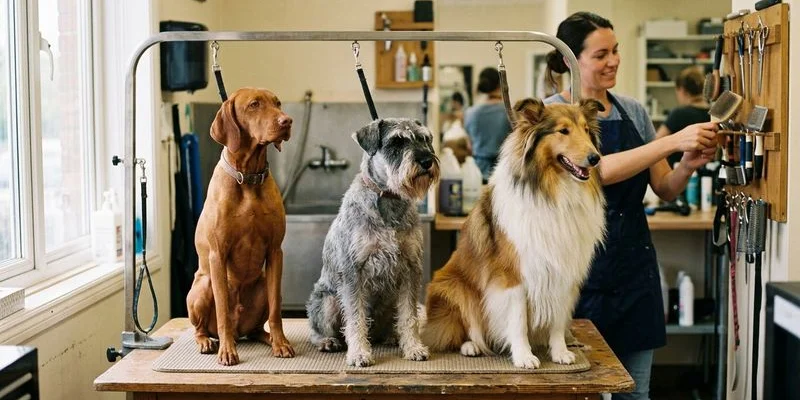
Breed-by-Breed Grooming Frequency Chart
Shift workers and busy families need clear expectations to plan their budgets and schedules. The chart below covers the most popular breeds we see at our boutique grooming spa in Durham.
| Breed | Maintenance Level | Professional Grooming | Bathing Frequency |
|---|---|---|---|
| Beagle & Boxer | Low | Every 8 to 12 Weeks | Every 6 to 8 weeks |
| Labrador & Pit Bull | Low | Every 8 to 12 Weeks | Every 4 to 6 weeks |
| Golden & German Shepherd | Moderate | Every 6 to 8 Weeks | Every 4 to 6 weeks |
| Australian Shepherd | Moderate | Every 6 to 8 Weeks | Every 4 to 6 weeks |
| Poodle & Doodles | High | Every 4 to 6 Weeks | Every 2 to 3 weeks |
| Shih Tzu & Yorkie | High | Every 4 to 6 Weeks | Every 2 to 3 weeks |
We built this framework to help owners plan ahead. Vacationing pet parents can easily schedule a full service right before they pick up their dog from a long stay.
Nail Trimming Frequency
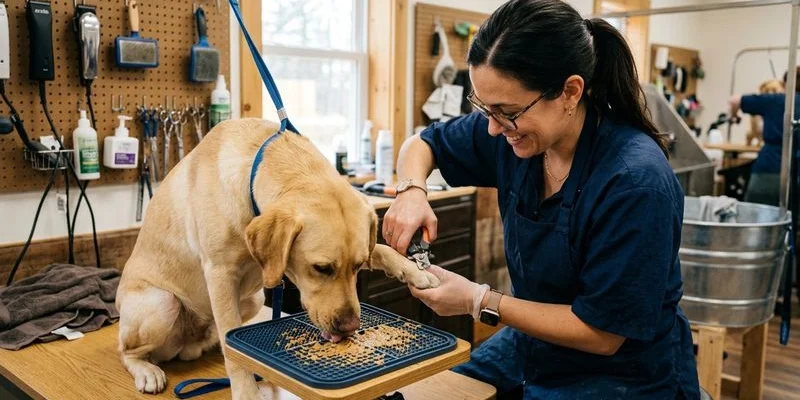
Every single dog requires consistent nail maintenance regardless of their hair type. Overgrown nails force the toes to splay out, which alters the dog’s natural gait. This unnatural posture places severe strain on the joints and often causes premature arthritis.
We strongly recommend keeping nails short enough that they never touch the ground.
- Most dogs: Require a trim or grind every 2 to 4 weeks.
- Active pavement walkers: Need attention every 4 to 6 weeks as concrete naturally files the tips.
- Indoor or senior dogs: Demand checks every 2 to 3 weeks due to limited friction.
A simple rule works best for busy owners. You are overdue for a trim if you hear your dog’s nails clicking loudly on your hardwood floors. For detailed guidance on specific tools like Dremel grinders or Miller’s Forge clippers, check out our nail trimming guide.
Ear Cleaning Frequency
Ear infections rank as one of the top reasons dogs visit the veterinarian in the US each year. Regular cleaning serves as the most effective prevention strategy against yeast and bacterial growth. Our team uses vet-approved solutions like Virbac Epi-Otic Advanced to gently clear out debris without irritating the sensitive canal.
- Floppy-eared breeds: Basset Hounds, Cocker Spaniels, and Beagles need weekly checks and cleaning every 1 to 2 weeks.
- Erect-eared breeds: German Shepherds and Huskies usually stay dry and require cleaning only every 2 to 4 weeks.
- Avid swimmers: Require a thorough flush immediately after every swim to prevent moisture buildup.
Factors That Increase Grooming Frequency
Beyond breed, several lifestyle factors dictate a faster grooming schedule.
Outdoor Activity Level in North Carolina
Durham offers incredible outdoor spaces for active dogs to explore. Dogs running through the Eno River trails or Duke Forest pick up dirt, ticks, and sticky burrs. We always check for these hidden hazards after a long hike. Active dogs require much more frequent brushing to remove woodland debris before it causes skin irritation.
Managing Allergies and Skin Conditions
US veterinary data from 2025 indicates that up to 15% of dogs suffer from environmental allergies. Dogs battling dermatitis or seasonal pollen reactions often require medicated baths every 1 to 2 weeks. Our staff works closely with local veterinarians to follow specific treatment protocols for sensitive skin. You must use the exact prescribed shampoos to see real improvement.
Age-Related Care Variations
Senior dogs lose the flexibility needed to groom themselves effectively. These older companions need gentle, frequent brushing to remove loose hair and prevent oil buildup. Puppies need very early exposure to brushes and clippers to build positive associations. Our puppy daycare program helps young dogs get comfortable with handling in a supportive, fun environment.
Seasonal Changes and Humidity
The infamous summer humidity in North Carolina completely changes a dog’s coat condition. The intense heat combined with energetic outdoor play during daycare means coats get greasy and dirty much faster. Winter weather brings the opposite problem with dry air. We switch to heavy moisturizing conditioners during January and February to prevent flaky skin.
Building a Sustainable Grooming Routine
The absolute best schedule is the one you can realistically maintain while working long shifts. Finding a rhythm keeps your dog healthy and prevents expensive dematting fees. We suggest following a simple checklist to get started.
- Identify your dog’s exact coat type using the categories outlined earlier.
- Book the recommended frequency for professional services a year in advance.
- Set a home brushing timer for just five minutes a day to build a habit.
- Listen for clicking nails and schedule trims immediately when you hear them.
- Adjust the bathing schedule as the seasons change or allergy symptoms peak.
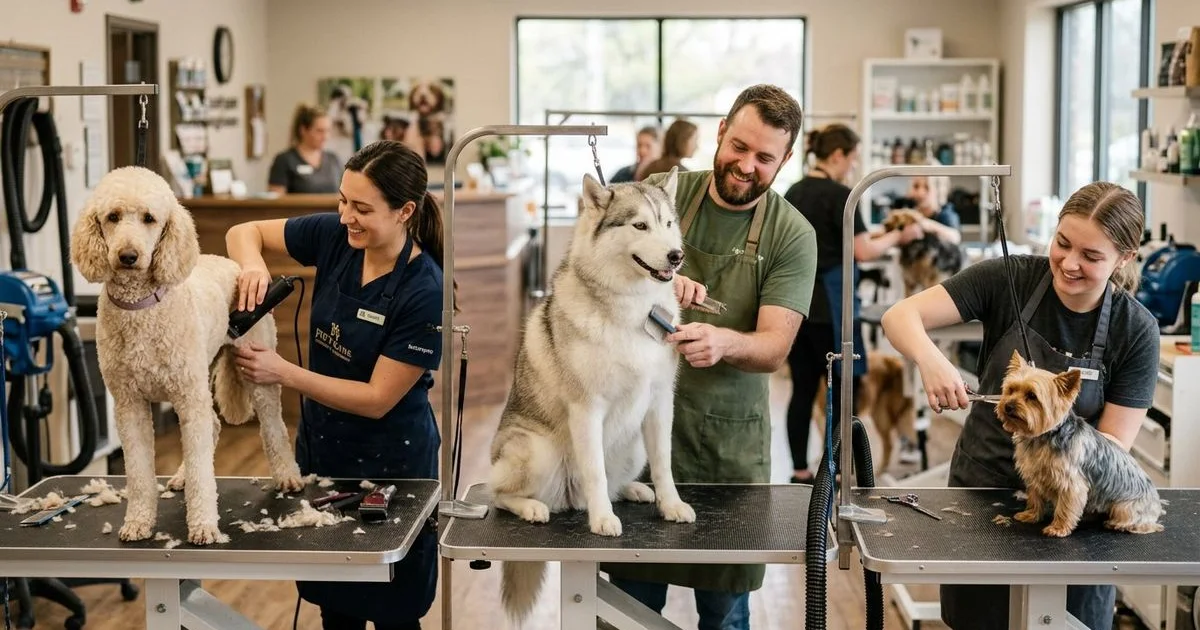
At Dog Daycare Durham, the boutique grooming spa provides full-service care for every breed. Caprice McManus and our experienced team assess your dog’s specific coat condition upon arrival. A personalized schedule is then created during your first visit. The facility is located at 600 Park Offices Drive, Suite 300, in Durham. Please call us at 919-617-0849 to book a convenient appointment.
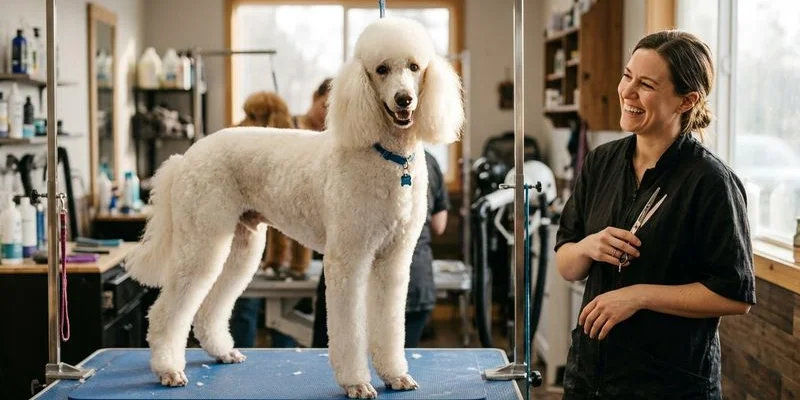
Consistent care represents a fundamental part of your dog’s overall health strategy.
Finding the right answer to “How Often Should You Groom Your Dog? A Breed-by-Breed Guide” prevents painful medical issues down the road. We use these sessions to catch hidden skin issues, strange lumps, and ticks early.
Your dog’s skin, coat, and mood will improve dramatically with a steady schedule. Call our front desk today to schedule an evaluation and get your dog on the right track.
Want the Best Care for Your Dog?
Schedule a free Interview Day and see why Durham pet parents trust our certified counselors.
Schedule Free Interview Day