Our team at Dog Daycare Durham knows that dogs need safe, structured enrichment instead of just a place to stay while you work. Busy professionals and shift workers simply do not have the time to battle a pulling pup before a long shift. A 2026 study from the University of the District of Columbia found that half of dog walkers experience leash forces of at least 28 pounds during a typical stroll.
We want to share some vital Leash Training Tips From Professional Dog Walkers in Durham to help you regain control.
These proven strategies replace chaotic outings with calm routines. Let’s look at why dogs pull, the exact equipment that stops it, and the daily techniques that build lasting leash manners.
Why Dogs Pull on the Leash
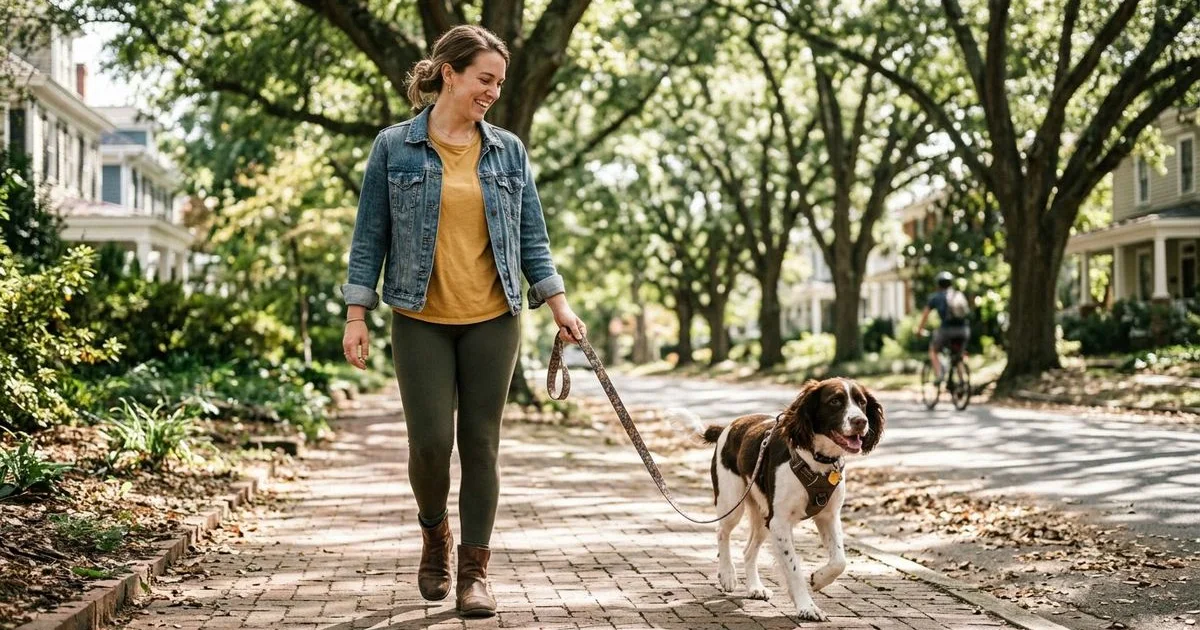
Our experience shows that dogs do not pull to be dominant or stubborn. They pull simply because the behavior gets them to their desired destination faster. Every time your dog lunges forward and you follow, that forward momentum reinforces the bad habit.
We often remind vacationing pet parents about the natural factors driving this behavior. Several specific triggers make loose-leash walking difficult for an untrained dog:
- Speed differences: A dog’s normal walking speed matches a human jogging pace.
- Sensory overload: New smells, darting squirrels, and passing cars create a highly distracting environment.
- Equipment frustration: The physical restraint of a standard leash causes inherent frustration.
A 2025 analysis in the journal Injury Prevention revealed that 68 percent of hand and wrist injuries during walks happen because of sudden leash pulling.
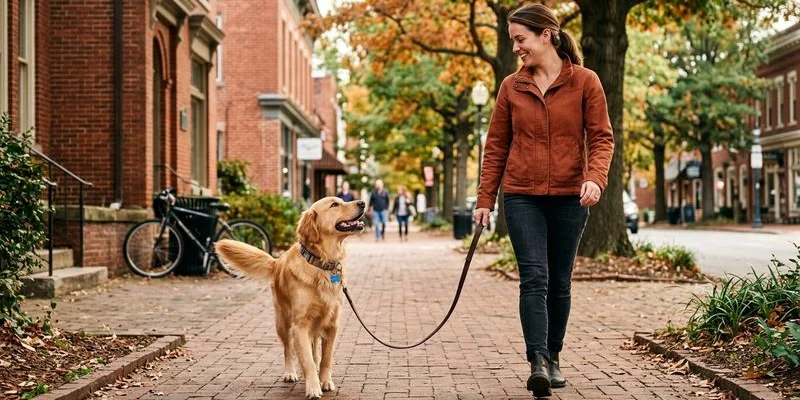
We know that consistent training techniques can successfully reverse this reinforced behavior. The process takes time, but the safety benefits are undeniable. Proper gear makes the initial transition much smoother.
The Foundation: Equipment That Helps
We always evaluate a dog’s equipment before starting any training protocol. The right harness or collar does not replace training, but it makes the process significantly easier. A 2025 study by researchers at Nottingham Trent University confirmed that collars pose a significant risk of neck injury when dogs pull, making harnesses a safer alternative.
Our facility uses specific criteria to recommend walking tools. The following table compares the most common equipment choices based on safety and control. Selecting the correct option prevents long-term physical damage to your pet.
| Equipment Type | Best For | Safety Rating | Control Level |
|---|---|---|---|
| Front-Clip Harness | Dogs learning leash manners | High | Excellent |
| Standard Flat Collar | Dogs who already walk well | Low for pullers | Poor |
| Head Halter | Strong pullers needing redirection | Medium | High |
| Retractable Leash | Open fields with trained dogs | Very Low | Minimal |
We examine several popular tool options before making a recommendation:
- Front-Clip Harness: Brands like Freedom, Balance, and Easy Walk naturally redirect the dog to face you when they pull.
- Standard Flat Collar: Constant pressure on a flat collar risks severe tracheal damage for heavy pullers.
- Head Halter: These provide excellent control by guiding the head, but require a careful introduction period.
- Retractable Leash: These devices reward forward pressure with more slack, completely undermining training efforts.
Prong collars and choke chains cause pain and create negative associations with walks. Positive, force-free methods remain the safest and most effective approach.
Core Leash Training Techniques
We focus on a few foundational exercises to build reliable habits. These core techniques require patience and repetition. Consistency forms the backbone of any successful behavior modification plan.
The Stop-and-Wait Method
Our trainers rely heavily on the stop-and-wait method as the simplest foundational technique. Follow these exact steps to execute it correctly:
- Begin walking at a normal, relaxed pace.
- Stop completely the moment your dog reaches the end of the leash and creates tension.
- Wait patiently until your dog eventually turns to look at you.
- Mark the behavior with a “yes” and resume walking the exact second the leash goes slack.
- Stop forward progress every single time the leash goes tight.
Dogs learn quickly that a tight leash ruins their fun.
We warn owners that the first few walks may cover very little ground. Patience remains essential during this initial learning phase. A loose leash becomes the only way the walk continues.
The Direction Change
We use the direction change strategy when a dog surges ahead aggressively. Calmly turn and walk in the opposite direction without giving any verbal warning. Your dog will reach the end of the leash, feel the gentle pull, and need to catch up.
Our staff always rewards the dog with praise and a high-value treat when they reach our side. This exercise teaches your pet to pay attention to human movement instead of forging ahead. After several repetitions, most dogs begin checking in regularly to anticipate direction changes.
The Reward Zone
We establish a specific area beside the handler’s leg as the designated reward zone. Any time your dog walks in this zone with a loose leash, deliver treats at a high rate. You can gradually space out the rewards as your dog improves their positioning.
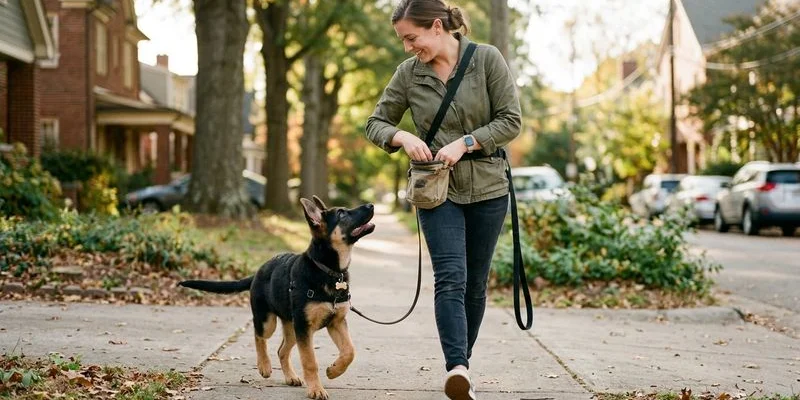
Our goal is to teach the dog that staying beside you represents the most rewarding place to be. Continuous reinforcement builds a strong, positive association with this position. The dog will naturally choose the reward zone over pulling ahead.
Dealing With Reactive Behavior on Walks
We handle reactive behavior like barking or lunging differently than simple pulling. Reactivity almost always stems from fear, frustration, or overstimulation rather than true aggression. A 2025 study from Virginia Tech discovered that five-week group training classes significantly decreased attention directed at target dogs when combined with active owner interaction.
Our approach prioritizes three specific management tactics for reactive dogs:
- Increase Distance: Crossing the street or moving behind a visual barrier immediately reduces the intensity of the reaction.
- Counter-Conditioning: Rapidly feed your dog high-value treats when a trigger appears at a safe distance.
- In-the-Moment Management: Calmly remove your dog from the situation if they are already barking or fixating, because a dog over their threshold cannot learn.
Over time, seeing another dog should cause your pet to look at you expectantly. Professional support provides a structured path forward for stressed handlers.
Our team can help assess your dog’s triggers and develop an action plan through our temperament testing process. A specific strategy ensures safety and gradual progress. Training consistently below the dog’s threshold yields the best long-term results.
Walking Tips Specific to Durham
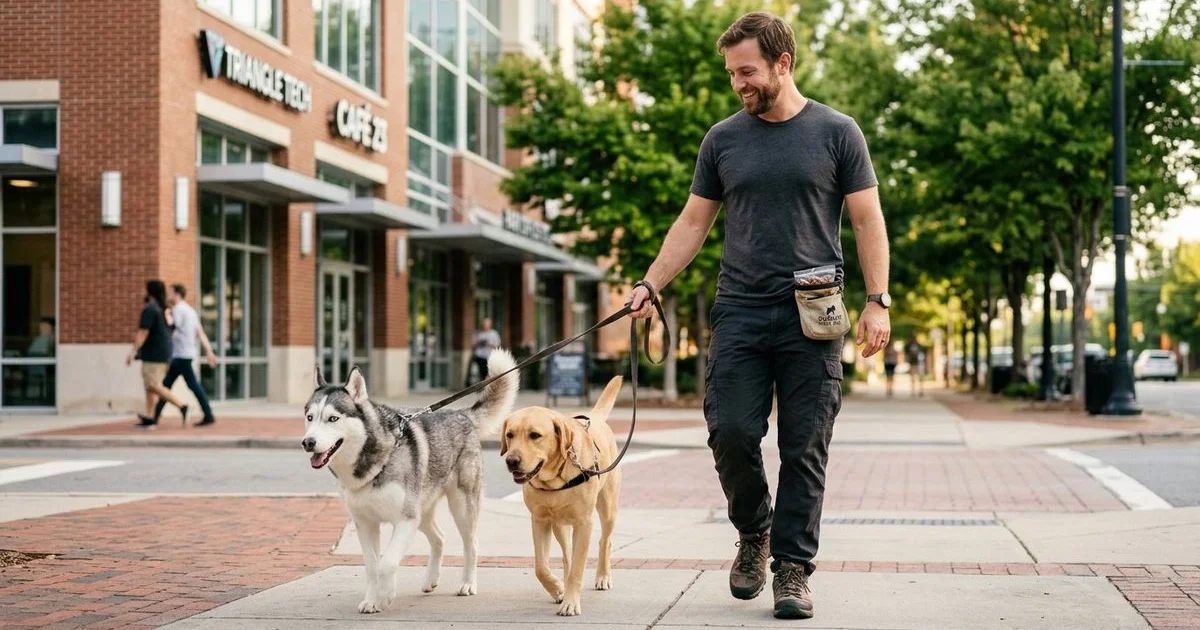
We love utilizing Durham’s walkable neighborhoods and trail systems for real-world practice. The American Tobacco Trail offers 22.2 miles of pathway stretching all the way to Apex. Keep these local factors in mind when planning your route:
- Location Choice: The shaded southern section below Southpoint Mall provides an ideal, less crowded environment for training sessions.
- Distraction Levels: Starting in low-distraction areas like your backyard prepares your dog for busy spots like Brightleaf Square.
- Summer Heat: Durham summers frequently push pavement temperatures above 130 degrees Fahrenheit, which quickly burns sensitive paw pads.
We advise walking early in the morning or after sunset during the summer months. Always test the pavement temperature with the back of your hand before heading out. Check this guide on heat safety for dogs in Durham for more seasonal protection strategies.
We encourage proper trail etiquette on shared-use paths. Keep your dog on a strict six-foot leash and always yield to joggers and cyclists. Practicing during quieter weekday mornings minimizes stressful encounters with heavy crowds.
Consistency: Essential Leash Training Tips From Professional Dog Walkers in Durham
We consider consistency the single most important factor in behavior modification. Every family member must use the same rules, equipment, and reward systems. If one person allows pulling while another corrects it, the mixed signals cause progress to stall entirely.
Our professional dog walking team reinforces positive leash behavior during every single outing. This steady reinforcement provides your dog with clear, unchanging expectations. Professional support accelerates your at-home training efforts significantly.
When Walking Becomes a Joy
We remind clients that leash training requires patience rather than expecting an overnight transformation. Most dogs show significant improvement within two to four weeks of steady practice. The investment of time pays enormous dividends in the form of relaxing, enjoyable walks.
We want to help you build a stronger bond with your pet through these Leash Training Tips From Professional Dog Walkers in Durham.
Call Dog Daycare Durham at 919-617-0849 today to schedule an evaluation. The facility sits at 600 Park Offices Drive, Suite 300, with extended hours from 6:30 AM to 7:30 PM to accommodate busy schedules.
Want the Best Care for Your Dog?
Schedule a free Interview Day and see why Durham pet parents trust our certified counselors.
Schedule Free Interview Day