If you are a busy medical professional or university staff working long shift hours, your time at home is precious.
As pet care professionals, we know that the first few minutes of a medical crisis often dictate the entire outcome.
Preparation replaces panic with decisive action. This is why every counselor at Dog Daycare Durham undergoes rigorous training in pet first aid and CPR. Over 15 years of caring for dogs, our team has handled our share of close calls and actual emergencies.
We will break down the pet first aid basics every dog owner should know, explain exactly what to do in those critical early moments, and share the warning signs you cannot afford to ignore. Keep this guide handy, because emergencies rarely happen during convenient hours.
Pet First Aid Basics Every Dog Owner Should Know: Building a Kit
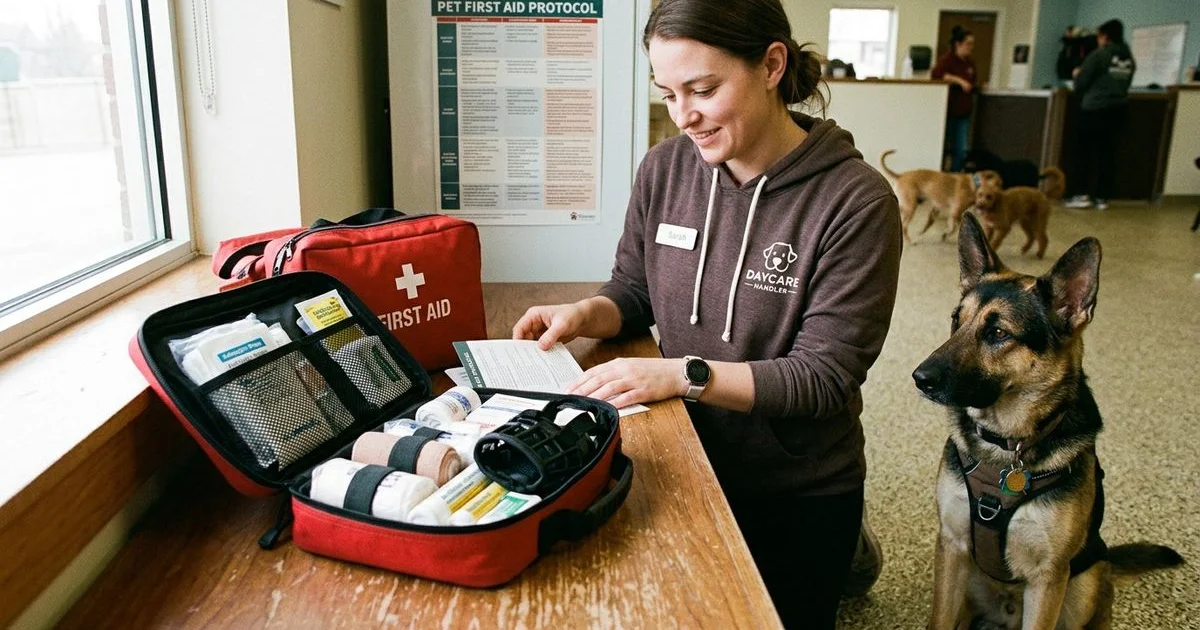
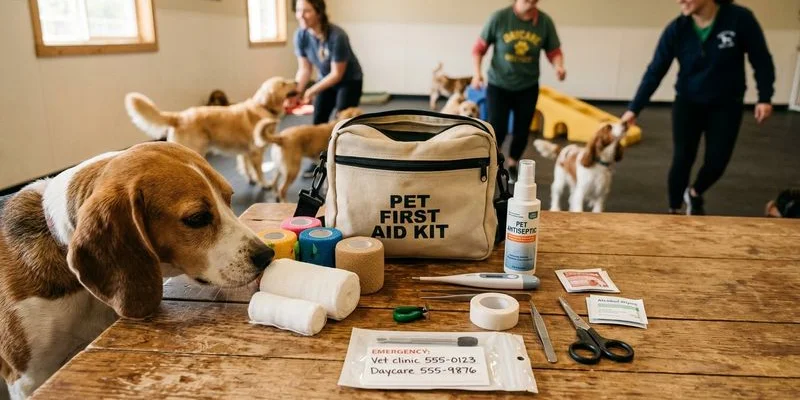
Before you handle specific emergencies, you need the right tools accessible at home and in your car. If you work irregular shifts, ensuring your pet sitters know exactly where this kit is located saves vital time. We strongly suggest downloading the free ASPCA Animal Poison Control App right now, which provides a fast digital reference for toxic substances.
Here is what to include in your physical kit:
- Gauze pads and rolls for wrapping wounds and muzzling an injured dog
- Adhesive medical tape (not bandaids, which do not adhere well to fur)
- Hydrogen peroxide (3%) to induce vomiting only when directed by a veterinarian or poison control
- Digital thermometer (a dog’s normal temperature is 101 to 102.5 degrees Fahrenheit)
- Tweezers for removing ticks, splinters, and debris
- Styptic powder to stop bleeding from a torn nail
- Saline solution for flushing wounds and eyes
- Disposable gloves
- Emergency contact card with your vet’s number, the nearest emergency vet clinic, and the ASPCA Animal Poison Control number (888-426-4435)
- Blanket or towel for warmth, restraint, or as a stretcher for a large injured dog
- Diphenhydramine (Benadryl) for severe allergic reactions or insect stings (always confirm the exact dosage with your vet beforehand)
Choking
Choking is one of the most time-sensitive emergencies you will encounter. Dogs can choke on toys, bones, sticks, chunks of food, or anything they manage to get into their mouths.
Many concerned pet owners confuse a harmless “reverse sneeze” with actual choking. Reverse sneezing involves rapid inhaling through the nose and loud snorting, but the dog can still breathe. True choking blocks the airway completely.
According to a 2024 study by Bow Wow Labs, veterinarians estimate that over 5.5 million dogs swallow an unchewed portion of a chew stick each year, leading to over 1 million vet visits in the United States.
Our staff recommends using a secured holder device like the Bow Wow Buddy when giving your dog bully sticks to prevent them from swallowing the hazardous final inch.
Signs of Choking
- Pawing at the mouth
- Gagging or retching without producing anything
- Difficulty breathing or high-pitched wheezing
- Blue-tinged gums or tongue
- Panic and distress
What to Do
- Stay calm. Your dog will feed off your anxiety, making the situation worse.
- Open the mouth carefully. If you can see the object and can reach it safely, try to sweep it out with your finger. Be careful not to push it deeper.
- If you cannot remove the object, perform the canine Heimlich maneuver:
- For small dogs: Hold the dog with their back against your chest, place a fist just below the rib cage, and give 3 to 5 quick upward thrusts.
- For large dogs: Stand behind the dog, wrap your arms around their abdomen, place a fist just behind the last rib, and give 3 to 5 firm upward and forward thrusts.
- Check the mouth after each set of thrusts to see if the object has dislodged.
- Get to a vet immediately even if the object comes out, as choking can cause internal swelling or tissue damage.

Heat Exhaustion and Heatstroke
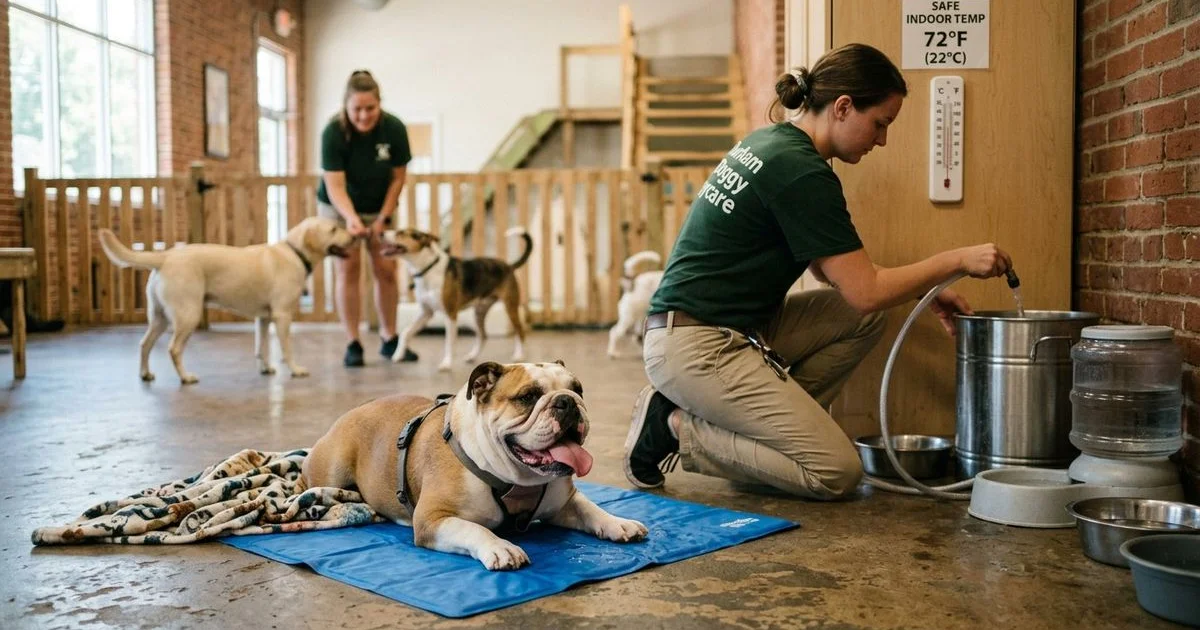
Durham summers regularly push temperatures into the 90s with high humidity, making heat-related illness a serious risk for dogs. Dogs do not sweat like humans. They cool themselves primarily through panting.
This natural cooling mechanism becomes completely ineffective when humidity levels exceed 80 percent. The moisture in the air prevents the dog’s saliva from evaporating, causing their internal temperature to spike rapidly.
Warning Signs
Heat exhaustion (early stage):
- Excessive panting that does not slow down with rest
- Thick, ropy drool
- Bright red gums and tongue
- Lethargy and reluctance to move
- Seeking shade or cool surfaces
Heatstroke (emergency):
- Staggering or disorientation
- Vomiting or diarrhea
- Gums turning pale, gray, or blue
- Collapse
- Seizures
What to Do
- Move the dog to a cool, shaded area immediately.
- Apply cool (not cold or ice) water to the dog’s neck, armpits, and groin area. Wet towels can be placed on these areas but must be re-wetted frequently, as they trap heat once warm.
- Offer small amounts of cool water but do not force drinking.
- Point a fan at the dog if one is available.
- Do not use ice water or ice packs. This causes blood vessels to constrict, trapping heat inside the body and making the situation worse.
- Transport to a veterinarian immediately. Heatstroke can cause organ damage that is not immediately visible.
For a more detailed guide on summer safety, read our complete article on heat safety for dogs in Durham’s summers.
Poisoning
Dogs are curious creatures who eat things they should not. Common household toxins include chocolate, xylitol, grapes and raisins, onions and garlic, certain houseplants, rodent poisons, and human medications.
Xylitol is particularly dangerous and is now frequently found in sugar-free gums, mints, and certain brands of peanut butter. To give you a clear picture of the most common threats, we reviewed the 2025 data from the ASPCA Animal Poison Control Center.
| Top Pet Toxins (ASPCA 2025 Data) | Specific Hazards |
|---|---|
| 1. Over-the-counter (OTC) medications | Accounts for 16.9% of calls. A major new hazard is trending skincare masks and creams, alongside ibuprofen. |
| 2. Human Food and Drink | Accounts for 16.4% of calls. Mostly grapes, raisins, onions, garlic, and xylitol. |
| 3. Human Prescription Medications | Cardiac medications, antidepressants, and ADHD drugs. |
| New 2025 Threat: Acetaminophen | Recently entered the top 10 canine poison list due to severe US flu seasons leaving more cold medications in homes. |
Signs of Poisoning
- Vomiting or diarrhea
- Excessive drooling
- Loss of coordination
- Tremors or seizures
- Difficulty breathing
- Lethargy or collapse
What to Do
- Identify the toxin if possible. Note what your dog ate, how much, and when. Bring the packaging or a sample to the vet.
- Call the ASPCA Animal Poison Control Center at 888-426-4435 (there is a consultation fee) or your veterinarian immediately.
- Do not induce vomiting unless specifically instructed by a veterinarian or poison control. Some substances cause more damage coming back up.
- Do not give home remedies like milk, oil, or salt water. These are not effective and can cause additional harm.
- Transport to an emergency vet as quickly as possible with any relevant information about the substance ingested.
Bleeding and Wounds
Dogs can sustain cuts, puncture wounds, and lacerations from broken glass, sharp objects, dog bites, or rough play. The severity determines whether you can manage the wound at home or need immediate veterinary care.
Our standard advice is to swap out hydrogen peroxide for a 0.2 percent chlorhexidine solution when cleaning minor scrapes. Hydrogen peroxide actually damages healthy tissue and delays healing, while chlorhexidine provides safe, effective disinfection.
Minor Wounds
For shallow cuts and scrapes:
- Apply gentle pressure with a clean gauze pad to stop bleeding.
- Flush the wound with saline solution or clean water to remove debris.
- Apply a thin layer of antibiotic ointment (plain, without pain relief additives that can be toxic to dogs).
- Cover with a light bandage if the dog will leave it alone, or use an e-collar to prevent licking.
- Monitor for signs of infection over the next few days: increasing redness, swelling, discharge, or warmth.
Serious Wounds
Seek immediate veterinary care for:
- Deep puncture wounds (especially from animal bites, which carry high infection risk)
- Wounds that will not stop bleeding after 5 to 10 minutes of pressure
- Wounds with visible muscle, bone, or fat tissue
- Any wound on the face, eye area, or near joints
Canine CPR
If your dog stops breathing or has no heartbeat, CPR can sustain them until you reach an emergency vet. This is a last-resort measure, and you should call for emergency veterinary help simultaneously.
According to the updated 2024 RECOVER Initiative guidelines, the survival to discharge rate for dogs experiencing cardiopulmonary arrest remains low at 5 to 7 percent. CPR is not a cure, but it is a vital bridge to professional medical intervention.
How to Perform Dog CPR
- Confirm the dog is unresponsive. Check for breathing by watching the chest and feeling for air from the nostrils.
- Check for a pulse. Place two fingers on the inside of the hind leg where it meets the body (the femoral artery).
- If no breathing but there is a pulse, perform rescue breathing:
- Close the dog’s mouth and extend the neck to straighten the airway
- Place your mouth over the dog’s nostrils and blow gently until you see the chest rise
- Give one breath every 3 to 5 seconds
- If no pulse, begin chest compressions:
- The 2024 RECOVER guidelines advise a strict rate of 100 to 120 compressions per minute.
- For medium to large dogs: Place the heel of your hand over the widest part of the chest. Compress one-third to one-half the depth of the chest.
- For wide-chested dogs (like Bulldogs): Place them on their back and compress the sternum to 25 percent of the chest depth.
- For small dogs: Wrap one hand around the chest and squeeze.
- Give 30 compressions, then 2 rescue breaths. Repeat.
- Check for a pulse every 2 minutes. Continue CPR until the dog revives, you reach the vet, or you have been performing CPR for 20 minutes without response.
Seizures
Witnessing a seizure is frightening, but your dog needs you to stay calm. Most seizures last less than a minute, even if it feels much longer.
What to Do
- Do not restrain the dog or put anything in their mouth. Dogs do not swallow their tongues.
- Move objects away that the dog could injure themselves on during the seizure.
- Time the seizure. We recommend using your smartphone to record a video of the event, as this provides critical diagnostic information for your veterinarian.
- Speak softly and calmly without touching the dog until the seizure ends.
- After the seizure, keep the dog in a quiet, dimly lit space. The post-ictal recovery phase causes disorientation and confusion that can last anywhere from a few minutes to a full 24 hours.
- Seek veterinary care for any first-time seizure, any seizure lasting longer than 3 minutes, or multiple seizures in a 24-hour period.
When to Go to the Emergency Vet
Some situations require immediate professional care, no matter the time of day:
- Difficulty breathing or blue-tinged gums
- Suspected poisoning
- Heatstroke symptoms
- Bloat (distended abdomen, retching without producing vomit, restlessness)
- Traumatic injury (hit by car, fall from height, attack by another animal)
- Seizures lasting more than 3 minutes
- Inability to urinate (especially in male dogs)
- Uncontrolled bleeding
- Sudden collapse or inability to stand
Durham has excellent 24-hour emergency veterinary options. You can head straight to the NC State Veterinary Hospital or visit the Triangle Veterinary Referral Hospitals (TVRH) located on Morreene Road.
Prevention Is the Best First Aid
The best emergency is one that never happens.
For busy professionals and vacationing pet parents, peace of mind is invaluable. At Dog Daycare Durham, our CPR-certified counselors supervise all play sessions, monitor for signs of overheating in our climate-controlled facility, and conduct health checks at every drop-off.
Our temperament testing process helps ensure safe group dynamics, and our staff-to-dog ratios keep a trained eye on every dog throughout the day. At home, you can reduce emergency risk by dog-proofing your space, keeping toxic foods and chemicals secured, providing fresh water at all times, avoiding exercise during peak heat hours, and keeping your dog’s vaccinations current.
Mastering the pet first aid basics every dog owner should know is a vital part of proactive care. Questions about pet safety or interested in a facility where trained professionals watch over your dog? Contact Dog Daycare Durham at 919-617-0849 or visit us at 600 Park Offices Drive, Suite 300, in Durham. Your dog’s safety is our top priority, every single day.

Want the Best Care for Your Dog?
Schedule a free Interview Day and see why Durham pet parents trust our certified counselors.
Schedule Free Interview Day